Showing posts with label Classics. Show all posts

Tuesday, September 13, 2016

Top Ten Tuesday: All-Time Favorite Modern Classics

A weekly meme hosted by The Broke and the Bookish

So I did the wrong prompt this week. I did next week's which is about audiobooks. And then I realized my issue and wasn't going to do one and then I decided I no, I have to. But then I got to the impossible task of deciding a genre my all-time favorite books. So I decided to talk about a subject I don't often talk about, especially these days and that's Classics. So here is my list of my favorite Modern Classics, which to me are books published in the 20th Century.
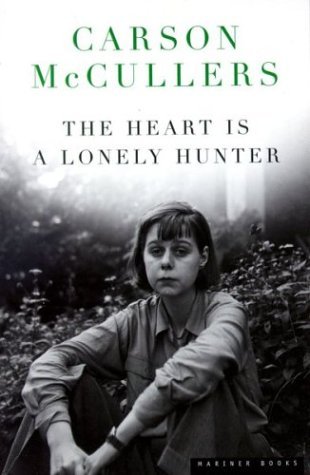
1.) The Heart is A Lonely Hunter by Carson McCullers - Add to Goodreads
So this is actually one of my all-time favorite books. I read it in a time where I totally related to the themes of loneliness and isolation. It's heartbreaking and beautifully written and everyone should read it. Especially if you like my next book.
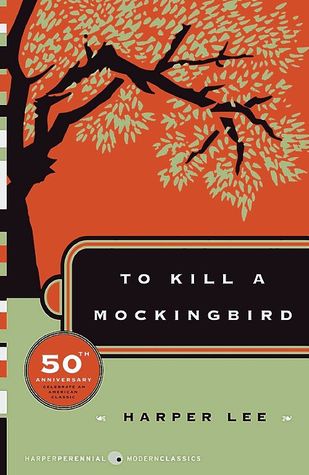
2.) To Kill a Mockingbird by Harper Lee - Add to Goodreads
Like most American teenagers (probably all right?) I had to read To Kill a Mockingbird in high school. But like a lot of people I really liked it. It is the kind of book you want to read for school so you can talk about it I think.

3.) The Great Gatsby by F. Scott Fitzgerald - Add to Goodreads
Some books are full of symbolism and it's annoying (I'm looking at you Heart of Darkness) and some books are full of symbolism and it's cool. Gatsby is the later. Plus like who doesn't love a book set in the 20's about unrequited love.
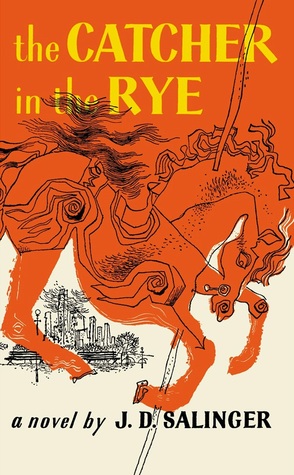
4.) Catcher in the Rye by J.D. Salinger - Add to Goodreads
In college I had to read Catcher in the Rye for I think at least two maybe three history classes. It got a little annoying but I liked the book so hey. Also I didn't actually read it again, I'm too lazy for that. But anyway, I'm a pretentious hipster who related to Holden because I hate phonies, you know.

5.) Of Mice and Men by John Steinbeck - Add to Goodreads
While we're at it, let's talk about the other required read I actually liked. I was all about Steinbeck for awhile. I did a whole research paper on him in high school. But Of Mice and Men is my favorite of his. Not just because it's short, but because it made the biggest impact.

6.) The Unbearable Lightness of Being by Milan Kundera - Add to Goodreads
I also went through a Kundera phase. Oh god, that sounded so pretentious. Anyway, I had to read The Joke for a class in college and really liked his style of writing so I read anything and everything from him. A lot of the Lit Fic I read back in the day was similar to him too.

7.) Rebecca by Daphne du Maurier - Add to Goodreads
Did you think this book was older? Nope, published in 1938. But it does have a very Gothic, Bronte sisters, vibe to it huh. I actually read this one kind of recently and really liked it. I'm a sucker fr Gothic ghost stories with a revenge aspect (check out tomorrows post) and I love a good mystery.
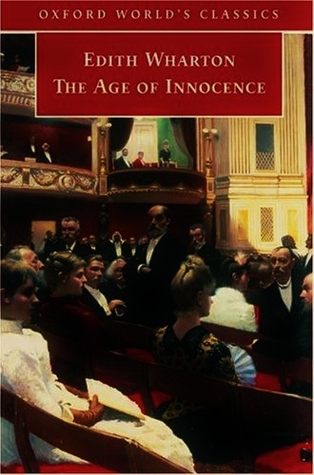
8.) The Age of Innocence by Edith Wharton - Add to Goodreads
You probably thought this one was earlier too. Nope, it was published in the 1920's despite it being about the 1880's. I read this last year I think and I really liked it. It was a totally great anti-love story that was like a parody of all those romantic classics. My romancephobic heart adored it.

9.) The Chronicles of Narnia by C.S. Lewis - Add to Goodreads
I think a lot of people would put Lord of the Rings or another precursor to the modern fantasy we know and love. For me, that's the Chronicles of Narnia. Also now I want to do a whole post about mid-Century fantasy. but I'm almost done with this one so another time.

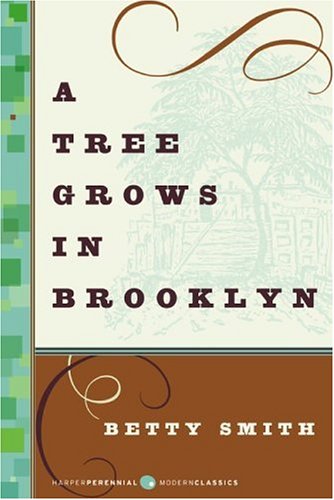
10.) A Tree Grows in Brooklyn by Betty Smith - Add to Goodreads
I think this one is a great way to finish off this list and bookended with The Heart is A Lonely Hunter feels so right. I know so many people who love this book so I finally read it a few years ago and absolutely see why. It's amazing and relatable.


There you have it. My list of favorite "Modern Classics." What are some of your favorites? What books made your list? Leave me a comment with your thoughts. Thanks for stopping by and HAPPY READING!

Friday, May 22, 2015

Classics Review: Northanger Abbey by Jane Austen

Title: Northanger Abbey
Author: Jane Austen
Published: Originally December 1818 by John Murray
(Amazon / Goodreads)

Synopsis: A wonderfully entertaining coming-of-age story, Northanger Abbey is often referred to as Jane Austen’s “Gothic parody.” Decrepit castles, locked rooms, mysterious chests, cryptic notes, and tyrannical fathers give the story an uncanny air, but one with a decidedly satirical twist. 

The story’s unlikely heroine is Catherine Morland, a remarkably innocent seventeen-year-old woman from a country parsonage. While spending a few weeks in Bath with a family friend, Catherine meets and falls in love with Henry Tilney, who invites her to visit his family estate, Northanger Abbey. Once there, Catherine, a great reader of Gothic thrillers, lets the shadowy atmosphere of the old mansion fill her mind with terrible suspicions. What is the mystery surrounding the death of Henry’s mother? Is the family concealing a terrible secret within the elegant rooms of the Abbey? Can she trust Henry, or is he part of an evil conspiracy? Catherine finds dreadful portents in the most prosaic events, until Henry persuades her to see the peril in confusing life with art. 

Executed with high-spirited gusto, Northanger Abbey is the most lighthearted of Jane Austen’s novels, yet at its core this delightful novel is a serious, unsentimental commentary on love and marriage.

I have an interesting history with Jane Austen. I know a lot of book lovers list her as one of their favorite authors and especially female book lovers probably list one of her books as their favorite classics. I however am not one of those people. I mean don't get me wrong, I like Austen but for me a lot of her stuff is kind of hit and miss. I have loved some, hated some, found some to be wordy, found others to be beautiful.

But that being said, I was really excited to read Northanger Abbey. I have heard it referred to as Jane Austen's Gothic parody. I love a good parody, especially of things that I enjoy (like Gothic literature) and I was not at all disappointed. This is definitely a kind of tongue in cheek response from Austen to her contemporaries but also to the people who love those sorts of novels. At times Austen breaks the forth wall and speaks directly to the reader explaining how ridiculous the characters have been and what we may have missed getting caught up in the story. She also directly names a list of Gothic novels including The Mysteries of Udolpho, a Gothic masterpiece, and debating whether they are great reads or horrible. It's definitely a book for book lovers in addition to being the most lighthearted of all Austen's novels that I have ever read.

One of the more lighthearted things about this book that also makes it quite an interesting parody is the romance. Jane Austen is the master of writing relationships that develop over time after a series of misunderstandings. But here she seems to be parodying herself. There are in fact misunderstandings but it is nor in terms of romantic feels or the characters feelings for one another. In fact the romantic leads spend a lot of time together flirting in a chaste 19th century sort of way. There is of course the typical Austenian love triangle and discussion of whether or not the character is an appropriate match but it never really seems to have the kind of drama that some of her other books have had.

But Catherine Morland is your typical Austenian heroine. She does not subscribe to your typical societal ideals for women at the time. She prefers being outside and reading to parties and social events but Catherine is also plucky and effervescent like Emma Woodhouse (though entirely less annoying). She has a sarcastic kind of humor and ends up getting caught up in her own world and assuming things that aren't entirely true. In this case she assumes that her real life is just like the books she reads. She goes to Northanger Abbey in search of adventure and mystery and this ends up causing problems for her. But throughout the book she learns from her mistakes and has a great character development.

I really enjoyed Northanger Abbey, it may have even beat out Sense and Sensibility as my favorite Jane Austen novel. It's a fast and fun read perfect for fans of classic literature especially if you enjoy Austen's other work or are a fan of books like Jane Eyre, Wuthering Heights, and Dickens but don't mind a little parody of your beloved books.

I give Northanger Abbey by Jane Austen 9 out of 10


Buy/Borrow/Bypass: Buy. This is definitely a classic I would recommend. It's not very long so you can probably cruise through it in a few days like I did. If you are a fan of Jane Austen then you must read this one. It's tongue in cheek but combines a lot of the best elements in Austen's novels to make something new and interesting.

Friday, April 17, 2015

Book Review: The Age of Innocence by Edith Wharton

Title: The Age of Innocence
Author: Edith Wharton
Published: 1920 by D. Appleton & Company
(Amazon / Goodreads)

Synopsis: Winner of the 1921 Pulitzer Prize, The Age of Innocence is Edith Wharton’s masterful portrait of desire and betrayal during the sumptuous Golden Age of Old New York, a time when society people “dreaded scandal more than disease.”

This is Newland Archer’s world as he prepares to marry the beautiful but conventional May Welland. But when the mysterious Countess Ellen Olenska returns to New York after a disastrous marriage, Archer falls deeply in love with her. Torn between duty and passion, Archer struggles to make a decision that will either courageously define his life—or mercilessly destroy it

I try to read a classic a month, there are just so many that I hadn't read. The Age of Innocence has been on my list for quite awhile. It's a classic that seems like one I would really enjoy. I was not disappointed in the history, the characters, and Edith Whatron's writing.

What was so interesting for me about this book is the historical context. It was written in the 1920's but it takes place in the 1870's (which is why I am reading it as part of my historical fiction month) so it can't be viewed entirely through either construct. Interestingly they are not very different periods in American history. The 1920's was a period of change and modernization. Frivolity and excess was celebrated and there was this general idea of people doing as they pleased (think The Great Gatsby). Where in the 1870's it was about excess and showing off but that was because it was what society deemed, it was all about convention and expectation. So Edith Wharton is writing through this lens as much as one fixed on the 1920's. And that to me is what made the book so interesting. The two ideas are at such odds throughout the novel. And it's a social commentary about not only the fact that you shouldn't look to society to dictate your actions but you also should do whatever you want because there will be consequences. The historical context made for some really interesting themes in The Age of Innocence.

And that idea of what society wants being at odds with what you want was embodied in the characters. First I want to say that I found it so interesting here that the book had a male protagonist. There sort of novels, especially classics, that focus on romance and modernizing despite societies conventions tend to focus on women whose role in society was at the heart of the change. But here we have Newland Archer as our protagonist. He's in a bit of a love triangle with his fiance, the demure society darling May Welland, and her cousin the modern and reckless Countess Olenska. All the characters were complex and interesting, I particularly enjoyed their development throughout the book. But I think what I really liked was the dynamic between them. Both romantic and non.-romantic. I love a good tortured romance in my classics and here we have a great one. Like most people I tend to get very tired of love triangles but here it really did work. It fit the characters, it fit the themes of the book, and it added drama instead of taking away from the plot.

In fact the plot really centered around the romance and that was perfectly fine with me. I really enjoyed seeing these characters interact.  There was this realistic subtle to them. They talked and they gossiped. They were on their best behavior because that's what society expected of them but in private they were who they wanted to be. They were constantly changing and evolving just as society was modernizing around them. It was almost a coming-of-age story with the character development. Edith Wharton wrote a beautiful character-driven novel about the entangled loves of the elites during the Gilded Age.

And what made the book so engaging was the writing. I tend to have this tortured relationship with a lot of classics because they are good but they're long with moments that just seem wordy and not very important to the general plot. And yes, it does have it's moments, but modern classics like this really improve on that a lot. We are still able to be immersed in the world but it's not all about explaining the setting. Edith Wharton makes New York in the 1890's come alive with the glamour and the parties but be don't get bogged down in the details. Her writing is lyrical and deep while still being readable. It's no wonder The Age of Innocence is a Pulitzer Winner. It's just an all-around well-written novel.

I give The Age of Innocence by Edith Wharton a 9 out of 10


Buy/Borrow/Bypass: Buy/Borrow A definite read for fans of romantic classics in the the vein of Jane Austen but especially for fans of the Bronte sisters. I loved the characters and the historical context. If you are a fan of books set during this period like I am then check this book out.

Have you read The Age of Innocence? What did you think? Leave me a comment with your thoughts.

Monday, February 23, 2015

Classics Review: Jo's Boys by Louisa May Alcott

Title: Jo's Boys
Series: Little Women #3
Author: Louisa May Alcott
First Published: 1886 by Robert Brothers
(Amazon / Goodreads)

Synopsis: Best known for the novels Little Women and Little Men, Louisa May Alcott brought the story of her feisty protagonist Jo and the adventures and misadventures of the March family to an entertaining, surprising, and bittersweet conclusion in Jo’s Boys. Beginning ten years after Little Men, Jo’s Boys revisits Plumfield, the New England school still presided over by Jo and her husband, Professor Bhaer. Jo remains at the center of the tale, surrounded by her boys—including rebellious Dan, sailor Emil, and promising musician Nat—as they experience shipwreck and storm, disappointment and even murder.

Popular for over a century, Alcott’s series still holds universal appeal with its powerful and affectionate depiction of family—the haven where the prodigal can always return, adversity is shared, and our dreams of being cherished, despite our flaws, come true. In this edition of Jo’s Boys, readers once again experience a treasured classic by one of America’s best-loved writers.

Remember when I said I was a big fan of Little Women? Like two weeks ago. You remember, when I reviewed Little Men. I thought that book was going to be hard to review, but wow, this one is even harder.

Jo's Boys perfectly combined the sentimental elements of both Little Women and Little Men to create a fantastic conclusion to the series. It was a bit of a stretch to say that Little Men is the sequel to Little Women, but it's not hard at all to see that this is the sequel to Little Men. We get to follow up with Jo and the students from Plumfield ten years after the original story. We see them as adults, going on adventures, falling in love, and of course getting into trouble. There were still lessons to be learned and philosophical ideals to pontificate but it was very much a story about friendship, family, and love. It had the same kind of sentimentality and joy adding it as an addendum to the place in my heart where Little Women and the Marches live.

I think what surprised me most about Jo's Boys is the fact that it also had much more of a historical significance to it. I mentioned in my review of March, a Little Women retelling, last week that one of the things that I found it interesting Little Women didn't much address is the topical events at the time. We knew the Civil War was occurring because Mr. March was off fighting, but it didn't much get political (not that I'm complaining). And while Jo's Boys didn't mention the political side of things it did mention things like the California Gold Rush, westward expansion, and other cultural events making an impact at the time. It really served to ground the book in reality and gave it much more context which I really enjoyed.

And of course Alcott creates fantastic and likable characters that earn places in my heart. The opportunity to follow-up and spend more time with these beloved characters from the two previous books was amazing. We of course got to see Jo again with the same kind of caring for others and motherly attitudes from Little Men but she does have a few moments where she is her old self again being a little brash (including a very tongue-in-cheek scene regarding fans of Jo's book). We also get to see Laurie a lot more in this one which is delightful. I'm such a fan of adult Laurie and I'm going to confess something here that is going to be an unpopular opinion. As an adult I support Laurie and Amy being together. It makes sense (don't hate me!) and while I'm still sad that he and Jo didn't end up together I totally get it now. But that's the tip of the iceberg. There are also all the boys from Little Men like Dan, Nat, Demi, Daisy, Bess, and Nan. Alcott's characters are always so complex and sweet it's always a pleasure to see them again.

Well I guess that wasn't so hard afterall. Just like Little Men I really enjoyed the final installment in a series that I have loved for as long as I can remember. And when the book was over I was a little sad to have read the last words. "... let the music stop, the lights die out, and the curtain fall forever on the March family."

I give Jo's Boys by Louisa May Alcott a 9 out of 10


Buy/Borrow/Bypass: BUY. Little Women fans should continue with this series. If you are fans of Classics that have a coming-of-age YA/MG feel then you should definitely read all these books. I'm so glad I finally took the time to continue with the Marches and now I am really sad to see them go but it was a fantastic and sentimental journey with them.

Have you read Jo's Boys? What did you think?  What is your favorite Classic? Leave me a comment with your thoughts.

Wednesday, February 11, 2015

Classics Review: Little Men by Louisa May Alcott

Title: Little Men
Series: Little Women #2
Author: Louisa May Alcott
Published: Originally 1871 by Roberts Brothers

Synopsis: Little Women, always wanted: a house "swarming with boys...in all stages of...effervescence." At the end ofLittle Women, Jo inherited the Plumfield estate from diamond-in-the-rough Aunt March. Now she and her husband, Professor Bhaer, provide their irrepressible charges with a very different sort of education--and much love. In fact, Jo confesses, she hardly knows "which I like best, writing or boys." Here is the story of the ragged orphan Nat, spoiled Stuffy, wild Dan, and all the other lively inhabitants of Plumfield, whose adventures have captivated generations of readers. 

I'm not sure if you knew this but I'm a huge fan of Little Women, like a huge fan. It is one of my favorite books of all time. I cry, I swoon, I flail every time I read or even think about it. I'm sad to say I have never read the next two books about the Marches. I hold Little Women in such high esteem that I didn't want anything to lessen that. But after reading Little Men I found myself wondering why I had waited so long to read it. It is a fantastic sequel to my most beloved Classic.

What I liked so much about Little Men is that it stayed true to the spirit of the original novel despite a completely new and different story. Of course it does still have the same analysis of morality, lessons about being your best self, and 19th Century platitudes. It has the same type of transcendentalist ideals that Little Women propagated like self-reliance, independence, equality, and access to education. But isn't that what we love about Louisa May Alcott? She's such an idealist and really wants you to be better without being preachy. What makes it so good is that Little Men also has the same sentimentality and heart as it's predecessor. While reading it you can't help but feeling this comfort and happiness.

But what Louisa May Alcott also does so well is create likable and complex characters that are far from perfect and that is exactly what she does here. In Little Men we get to follow up with some of our favorite characters from Little Women and every single reference to these characters made me flail so much (include a mention of Beth that yes, did make me cry, because every time). But it's really about their children and those of that generation. It takes us through important moments of the lives of Jo, Mr. Behr, and the boys at Plumfield. Each character has their flaws but they are learning and growing. The only thing I didn't totally love was that Jo seems to have lost most of her impetuousness. She was doing her best Marmee impression but it still worked. It's hard to see a favorite character in a different light but it was nice to see her as a more thoughtful and mature adult, just as she always wanted to be. I can't dislike Jo, she's my favorite! But all the characters were just as genuine, relatable, and interesting.

And like it's predecessor, the best part about Little Men was the larger issue of love that it addressed. And just like Little Women, it wasn't about romantic love. What the first book did for familial love, Little Men does for friendship. The trust, love, and devotion the characters learn for one another is incredibly heartwarming. Despite numerous obstacles and reasons that could keep them from that friendship they still have nothing but devotion for each other at Plumfield. And that is exactly why the book had the same sweet sentimentality as Little Women.

 On the whole I absolutely adored this next installment in one of my favorite books of all time and I love that it stayed true to the previous story and gave us more depth and the opportunity to follow the characters that I have nothing but love for. When I was finished reading I couldn't believe it was already over, I wanted so much more. Good thing I now have Jo's Boys to read!

 I give Little Men by Louisa May Alcott a 9.5 out of 10 stars


Buy/Borrow/Bypass: BUY! Fans of Little Women should absolutely buy and read the next installment of this most beloved novel. It's beautifully written with a sweet and sentimental plot and great characters that are realistic and likable. A wonderful read!

 Have you read Little Men? What did you think? Leave me a comment with your thoughts. Thanks for stopping by and HAPPY READING!

Thursday, July 24, 2014

Book Review: A Tree Grows in Brooklyn by Betty Smith

Title: A Tree Grows in Brooklyn
Author: Betty Smith
Published: Originally 1943 by Harper & Brothers
Amazon Goodreads


Synopsis: A Tree Grows in Brooklyn is a poignant and moving tale filled with compassion and cruelty, laughter and heartache, crowded with life and people and incident. The story of young, sensitive, and idealistic Francie Nolan and her bittersweet formative years in the slums of Williamsburg has enchanted and inspired millions of readers for more than sixty years. By turns overwhelming, sublime, heartbreaking, and uplifting, the daily experiences of the unforgettable Nolans are raw with honesty and tenderly threaded with family connectedness -- in a work of literary art that brilliantly captures a unique time and place as well as incredibly rich moments of universal experience.
One of the most interesting things about this book is that I'm not really sure how to categorize it. It's a fictionalization of the author's upbringing, so it's not quite a memoir but it's also not quite fiction either. But if it is in fact fiction it's hard to place it in a genre. The book was written in 1943 but takes place in the early 1900s. You could accurately say that it is Historical Fiction but it also feels very current and contemporary. What this book absolutely does is make the reader feel what it was like to grow up poor at the start of the 20th century in Brooklyn. It's a completely immersive experience.

The book was an extremely real and gritty portrayal of the life and the time period it was presenting. It didn't gloss over the difficulties of life and being poor. A Tree Grows in Brooklyn focuses almost entirely on those difficult and sad moments in life but it also shows how you need those moments to appreciate the good and happy moments in life. When you're reading this book you feel as if you are part of the Nolan family, struggling to make ends meet and wondering how you are going to find a nickel to buy food. But you also feel the sense of love within the family and the sense of hope that a better life is possible. I expected to have a serious emotional reaction to this book and while it didn't bring me to tears (which a lot of books do) I did feel a deep connection to this family and their struggle.

The plot of the book could very easily have become monotonous and dull but Betty Smith effortlessly immersed the reader in the world of Brooklyn and the Nolans with beautiful prose and a style of writing that allows you to easily connect with the characters. I read this book as part of my "Geek Books" month and the main character of Francie definitely fit the bill of the types of characters in this theme. She is a voracious reader who finds it hard to make friends and loves school but with her family situation employment has to take the place of further education. I instantly connected with Francie and her desire to succeed despite and because of her upbringing. I loved being along for the ride for her coming-of-age story.

This book made me appreciate so much about my life and personal experience. It made me appreciate my family and the opportunities I had, and it made me appreciate the fact that like Francie I can read to escape, learn, and explore something outside of myself. The book was a phenomenal classic and reminded me a lot of books like Little Women and Little House on the Prairie.

I give A Tree Grow in Brooklyn by Betty Smith a 9 out of 10


I would definitely recommend this book if you like modern classics from the mid 20th Century like To Kill A Mockingbird or The Catcher in the Rye. If you like coming-of-age stories with beautiful writing that illicits an emotional response then check this book out. 

Have you read A Tree Grows in Brooklyn? What did you think? Leave me a comment with your thoughts. If you haven't read it, what are some of your favorite Modern Classics, I love these kinds of books and would love to read some more. Thanks for stopping by and HAPPY READING! 
Monday, June 23, 2014

Book Review: The Wonderful Wizard of Oz b L. Frank Baum

Title: The Wonderful Wizard of Oz
Series: Oz #1
Author: L. Frank Baum
Published: May 1900 by George M. Hill Company
Amazon Goodreads 

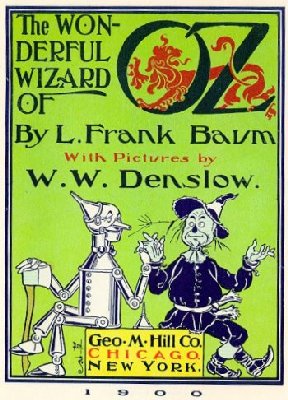
Synopsis: The Wonderful Wizard of Oz is a children's novel written by L. Frank Baum and illustrated by W. W. Denslow. Originally published by the George M. Hill Company in Chicago on May 17, 1900, it has since been reprinted numerous times, most often under the name The Wizard of Oz, which is the name of both the 1902 stage play and the extremely popular, highly acclaimed 1939 film version. The story chronicles the adventures of a girl named Dorothy in the Land of Oz. Thanks in part to the 1939 MGM movie, it is one of the best-known stories in American popular culture and has been widely translated. Its initial success, and the success of the popular 1902 Broadway musical Baum adapted from his story, led to Baum's writing thirteen more Oz books. The original book has been in the public domain in the US since 1956.

Baum dedicated the book "to my good friend & comrade, My Wife", Maud Gage Baum. In January 1901, George M. Hill Company, the publisher, completed printing the first edition, which probably totaled around 35,000 copies. Records indicate that 21,000 copies were sold through 1900. Historians, economists and literary scholars have examined and developed possible political interpretations of The Wonderful Wizard of Oz. However, the majority of the reading public simply takes the story at face value.

As you may know, here on the blog I like to do a monthly classic that fits the theme. This month's theme is retellings which makes choosing a classic a little difficult. What is a classic retelling? So instead of finding one that fit the theme perfectly I decided to choose a classic version of one of the books I was reading the retelling of. So I decided to read The Wonderful Wizard of Oz because despite my enjoyment of the movie and Oz retelling I have never read the original. And while I enjoyed reading the familiar story from its original source, as far as literature I wasn't completely entertained.

Firstly, what I found interesting about this book was further exploration of the land of Oz. The original source material always has much more info than other treatments of the story, so it was great to experience it from the way it was first written. Not only did we get to develop with the characters we are familiar with but we also got a few more and even got to visit some parts of Oz that weren't part of the movie. If the only thing you know about Oz is the Judy Garland film this book is actually quite different. It's definitely not as dark. We spend a lot less time with the Wicked Witch, and it is much less against fighting her and more about appeasing the wizard.

I also enjoyed and wasn't at all surprised by the books theme of politics and power. Many of the Oz retellings I have read including Wicked and Dorothy Must Die have an underlying theme of power and control. It is incredibly evident as to why after reading The Wonderful Wizard of Oz. Simmering under the surface is the idea of how those who take control don't necessarily deserve it and how they tend to take advantage of their "subjects." I've heard before that The Wonderful Wizard of Oz is political allegory for money and power in the late 19th century and after reading the book I am definitely in that school of thought.

But despite all that it did have going for it, I wasn't hooked on the story because of it's format and writing style. You guys probably know, I don't like travel montages. If all the characters do is move from point A to point B I am not at all entertained. I know going in that this is the kind of story The Wonderful Wizard of Oz is, but what struck me throughout the course of reading was just how basic the plot was. It just felt very superficial. Every chapter was just "they did this thing and went here." That is probably my least favorite type of writing style and I was kind of disappointed in the way the book was written. I know this book was written for children so I shouldn't it too harshly, I just always have high expectations even when it comes to children's books. Maybe if I had read it when I was younger I would have liked it a little bit more.

I give The Wonderful Wizard of Oz by L. Frank Baum a 7 out of 10.


I would recommend this book to fans of The Wizard of Oz who want to explore the source material or read the book in it's original form. Or I would honestly recommend this book as a great bedtime story for your children. Read this book aloud and get them hooked on Oz.

Have you read The Wonderful Wizard of Oz? What did you think? Leave me a comment with your thoughts. Thanks for stopping by and of course... HAPPY READING!

Monday, June 2, 2014

Book Review: Rebecca by Daphne du Maurier

Title: Rebecca
Author: Daphne du Maurier
Published: Originally 1938 by Victor Gollancz

Amazon Goodreads

Synopsis: The novel begins in Monte Carlo, where our heroine is swept off her feet by the dashing Maxim de Winter and his sudden proposal of marriage. Orphaned and working as a lady’s maid, she can barely believe her luck.

It is only when they arrive at his massive country estate that she realizes how large a shadow his late wife will cast over their lives—presenting her with a lingering evil that threatens to destroy their marriage from beyond the grave.

Rebecca is a book that has been in my TBR pile for a very long time. I’m a big fan of Gothic romances and the creepy house with hidden secrets concept, one of my favorite books is Wuthering Heights after all. But I have been disappointed by a few Gothic novels in the past so I started Rebecca slightly worried but excited. I was quickly hooked and devoured it with ferocious desire to solve all the secrets and mystery. Right away into reading I was struck with the ominous tone of the story.

Much of the book had this sense of foreboding, like you could tell that nothing was as it seemed and that things were not going to end well. Plus like most classics and especially those written in the early to mid 20th Century Rebecca is written with elegant and beautiful prose that struck an emotional chord with me. However, more than that I was just incredibly excited to be reading a book that gave me a sense of creepy unease. Throughout most of the book I would find myself squealing in excitement when things got mysterious or dramatic. It was actually quite odd.

And much of the book was mysterious and dramatic. While the house of Manderly isn’t physically haunted, to our narrator she feels the presence of Rebecca everywhere and the secrets and mystery surrounding her death is a huge part of the story. As a person who prides themselves on an ability to solve twists (check out my discussion post for proof) I was surprised to find out that I didn’t predict much of the ending of this book. While the main secret was pretty evident very little else was obvious to me. And the constant shocking surprises made the book so enjoyable for me.

But much of what made the book mysterious was the characters. Our unnamed narrator (she is only kown as Mrs. de Winter) is just the vessel that allows us to get to know a crazy and complicated character. Max de Winter is just like everyone’s favorite Gothic heartthorbs like Heathcliff or Rochester. He’s brooding and mysterious with a short temper and a lot of secrets. Then there is the devious Mrs. Danvers who is the maid determined to make the narrator miserable. It’s evident almost right away that she is up to no good and made me giddy with how creepy she is (see what I mean about it being odd). Then of course there was the title character who wasn’t even physically present but even more a part of this story than most other characters.

A mysterious plot, an elegantly written book with an ominous tone, and a cast of creep and complicated characters made this a very enjoyable read for me.

I give Rebecca by Daphne du Maurier an 8.5 out of 10


I would definitely recommend this book. If you are a fan of Gothic literature like Withering Heights or Jane Eyre, or are looking for a Thriller or Mystery that will give you a feeling of uneasy confusion then check out Rebecca. Have you read Rebecca? What were your thoughts? Leave me a comment and let’s start a conversation. HAPPY READING!